

Switching to solar energy is one of the smartest financial and environmental decisions for homeowners in New South Wales (NSW). With generous government incentives, rebates, and feed-in tariffs, installing solar panels can significantly reduce electricity bills and even generate income. Understanding how the solar rebate NSW program works is essential to maximize savings and make the most of available benefits. Rebates can take thousands of dollars off the upfront cost of going solar, but whether solar is really worth it for your situation in Sydney depends on your usage, tariffs and roof, and this starter guide walks through those factors in simple terms.
This guide explains everything about solar rebates in NSW, including eligibility, application processes, and how to save thousands on solar installation.
What Is the Solar Rebate NSW?
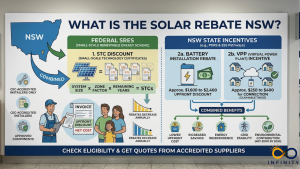
The solar rebate NSW is a government-backed incentive designed to encourage households and businesses to switch to renewable energy. It helps reduce the upfront cost of installing solar panels by providing financial support through the Small-scale Renewable Energy Scheme (SRES). The New South Wales government is working to encourage using renewable energy, such as solar power, to fight climate change.
Under this scheme, homeowners receive Small-scale Technology Certificates (STCs) for every kilowatt of solar energy capacity installed. These certificates can be sold or traded to offset the cost of the solar system, effectively acting as a rebate. Solar rebates in NSW help you cut the upfront cost, but your long‑term savings depend on how well your system performs over the years, which is why regular solar panel maintenance is so important for protecting those savings.
The solar rebate NSW is not a direct cash payment but a discount applied at the time of purchase. Most solar installers handle the rebate process on behalf of customers, making it simple and hassle-free.
How the Solar Rebate NSW Works

The solar rebate NSW operates through the federal government’s SRES program. When a solar system is installed, it generates a certain number of STCs based on:
- The size of the solar system (in kilowatts)
- The location (postcode zone)
- The amount of renewable energy expected to be produced over the system’s lifetime
Each STC has a market value that fluctuates depending on supply and demand. The total rebate amount is calculated by multiplying the number of STCs by the current market price.
For example, a 6.6kW solar system in NSW might generate around 90 STCs. If each STC is valued at $35, the total rebate would be approximately $3,150. This amount is deducted from the total installation cost, reducing the upfront expense. Because rebate levels and installation demand can shift over time, choosing the best time to install solar panels in Sydney can help you lock in strong incentives while also getting your system on the roof before electricity prices rise again.
Eligibility for the Solar Rebate NSW

To qualify for the solar rebate NSW, certain conditions must be met:
- System Size: The solar system must be under 100kW in capacity.
- Accredited Installer: Installation must be completed by a Clean Energy Council (CEC) accredited installer.
- Approved Panels and Inverters: Only CEC-approved solar panels and inverters are eligible.
- Location: The property must be located within NSW.
- Ownership: The applicant must own the property or have permission from the property owner.
Meeting these requirements ensures eligibility for the solar rebate NSW and guarantees that the system meets Australian safety and performance standards.
How to Apply for the Solar Rebate NSW

Applying for the solar rebate NSW is straightforward. Most solar companies manage the process automatically, but understanding the steps helps ensure transparency.
- Get a Quote: Request quotes from multiple CEC-accredited solar installers.
- Confirm Eligibility: Verify that the system and installer meet all requirements.
- Installation: Once installed, the installer will create and assign STCs.
- Rebate Deduction: The installer usually applies the rebate as an upfront discount.
- Documentation: Keep all receipts and certificates for future reference.
The entire process is typically completed within a few weeks, depending on the installer and system size.
Additional Solar Incentives in NSW

Beyond the solar rebate NSW, several other incentives can further increase savings:
-
Solar Feed-in Tariffs (FiTs)
Feed-in tariffs reward homeowners for exporting excess solar energy back to the grid. Electricity retailers pay a set rate per kilowatt-hour (kWh) of exported energy.
In NSW, feed-in tariffs typically range from 5 to 15 cents per kWh, depending on the retailer. Comparing energy providers can help secure the best rate.
-
Solar Battery Rebates
While NSW does not currently offer a direct solar battery rebate, some programs and financing options make battery storage more affordable. Batteries allow homeowners to store excess energy for nighttime use, increasing energy independence and reducing reliance on the grid.
-
Low-Interest Solar Loans
The NSW government offers low-interest loans through the Empowering Homes Program, helping eligible households finance solar and battery systems with minimal upfront costs.
-
Energy Efficiency Programs
Programs like the Energy Savings Scheme (ESS) provide additional incentives for energy-efficient upgrades, complementing the solar rebate NSW benefits.
How Much Can Be Saved with the Solar Rebate NSW?

The amount saved through the solar rebate NSW depends on several factors, including system size, location, and STC market value. NSW solar rebates reduce the price per kilowatt of solar you install, but they do not guarantee panel quality, so it is worth checking whether the brands included in your quote line up with the leading solar panel brands in Australia.
Here’s an approximate breakdown of potential savings:
| System Size (kW) | Approx. STCs | Rebate Value ($35/STC) | Estimated Savings |
| 3.3 | 45 | $1,575 | $1,500–$1,800 |
| 5.0 | 70 | $2,450 | $2,400–$2,800 |
| 6.6 | 90 | $3,150 | $3,000–$3,500 |
| 10.0 | 135 | $4,725 | $4,500–$5,000 |
These savings significantly reduce the upfront cost of solar installation. Combined with feed-in tariffs and lower electricity bills, homeowners can save thousands over the system’s lifetime.
Benefits of the Solar Rebate NSW
-
Lower Upfront Costs
The solar rebate NSW reduces the initial investment required to install solar panels, making renewable energy accessible to more households.
-
Faster Payback Period
With reduced installation costs and ongoing energy savings, most solar systems in NSW achieve payback within 3 to 5 years.
-
Increased Property Value
Homes with solar installations often have higher property values and attract eco-conscious buyers.
-
Environmental Impact
Switching to solar reduces carbon emissions and dependence on fossil fuels, contributing to a cleaner environment.
-
Long-Term Savings
Solar panels typically last 25 years or more, providing decades of free electricity after the initial payback period.
To really understand how much money you can save with NSW solar rebates, you need to look at both the payback period and how long your panels are likely to last, and this guide to solar panel lifespan explains the typical life expectancy and what affects it.
Common Myths About the Solar Rebate NSW

Myth 1: The Solar Rebate NSW Has Ended
The solar rebate NSW is still active under the federal SRES program. However, the number of STCs decreases slightly each year until 2030, so installing sooner maximizes savings.
Myth 2: Only Homeowners Can Apply
Renters can also benefit from solar if the property owner agrees to the installation. Some landlords install solar systems to attract tenants and increase property value.
Myth 3: The Rebate Is a Cash Payment
The solar rebate NSW is not a direct cash payment but a discount applied to the purchase price through STCs.
Myth 4: Solar Panels Don’t Work on Cloudy Days
Solar panels still generate electricity on cloudy days, though at reduced efficiency. NSW’s sunny climate ensures consistent solar production year-round.
How to Maximize Savings from the Solar Rebate NSW
- Install Sooner Rather Than Later: The rebate value decreases annually, so early installation ensures higher savings.
- Choose a Reputable Installer: Work with CEC-accredited installers to guarantee quality and eligibility.
- Optimize System Size: Select a system that matches household energy consumption for maximum efficiency.
- Compare Feed-in Tariffs: Shop around for energy retailers offering the best rates for exported solar power.
- Consider Battery Storage: Adding a battery can increase self-consumption and reduce grid reliance.
The Future of Solar Rebates in NSW
The solar rebate NSW will continue to decline gradually until 2030, when the SRES program is scheduled to end. However, as solar technology becomes more affordable and efficient, the overall cost of installation is expected to remain accessible.
The NSW government is also exploring new initiatives to support renewable energy adoption, including community solar projects and virtual power plants (VPPs). These programs aim to make solar energy even more beneficial for households and businesses.
Frequently Asked Questions (FAQs) – Solar Rebates NSW Explained: How to Save Thousands

-
What are solar rebates in NSW?
Solar rebates in NSW are government incentives that help reduce the upfront cost of installing solar panels. These mainly include federal incentives like Small-scale Technology Certificates (STCs), which can significantly lower installation expenses.
-
How much can I save with solar rebates in NSW?
The amount you save depends on your system size, energy usage, and location. In many cases, NSW homeowners can save thousands of dollars on installation costs through rebates and long-term electricity bill reductions.
-
Who is eligible for solar rebates in NSW?
Most homeowners, landlords, and small businesses installing eligible solar systems qualify for rebates. The property must meet certain requirements, and the system should be installed by a certified installer.
-
What are STCs, and how do they work?
Small-scale Technology Certificates (STCs) are government incentives given based on the expected energy generation of your solar system. Your installer usually applies the discount upfront, reducing your total system cost.
-
Can renters apply for solar rebates?
Renters generally cannot apply directly unless they own the property. However, landlords can install solar and benefit from rebates while increasing property value.
Conclusion
The solar rebate NSW offers a powerful opportunity to save thousands on solar installation while contributing to a sustainable future. By understanding how the rebate works, meeting eligibility requirements, and choosing the right system, homeowners can enjoy long-term financial and environmental benefits.
With electricity prices continuing to rise, there has never been a better time to invest in solar energy. Taking advantage of the solar rebate NSW today ensures maximum savings and a cleaner, greener tomorrow.