

Solar energy has become one of the most popular renewable energy sources for homes and businesses. As more people switch to solar power, one of the most common questions arises: Which is better—monocrystalline or polycrystalline solar panels? Understanding the differences between these two types of solar panels is essential for making an informed decision that fits energy needs, budget, and long-term goals.
This guide explores everything about monocrystalline solar panels and polycrystalline solar panels, including their efficiency, cost, durability, and performance in different conditions. By the end, it will be clear which type of solar panel is the best choice.
What Are Monocrystalline Solar Panels?

Monocrystalline solar panels are made from a single continuous crystal structure of silicon. Each solar cell is cut from a single silicon ingot, giving it a uniform black appearance. This design allows electrons to move more freely, resulting in higher efficiency and better performance.
Key Features of Monocrystalline Solar Panels
- Made from pure silicon
- Uniform black color
- Rounded edges on solar cells
- Higher efficiency rates (typically 18–23%)
- Longer lifespan (25 years or more)
Because of their high efficiency and sleek design, monocrystalline solar panels are often used in residential and commercial installations where space is limited but maximum power output is desired.
What Are Polycrystalline Solar Panels?

Polycrystalline solar panels, also known as multicrystalline panels, are made from multiple silicon crystals melted together. This process gives the panels a blue, speckled appearance. While they are less efficient than monocrystalline panels, they are more affordable to produce.
Key Features of Polycrystalline Solar Panels
- Made from multiple silicon fragments
- Blue, speckled look
- Square-shaped cells
- Efficiency rates between 15–18%
- Slightly shorter lifespan than monocrystalline panels
Polycrystalline solar panels are a cost-effective option for those who have more roof space and want to save on upfront costs. Both monocrystalline and polycrystalline solar panels can be good choices for your home, but there are key differences you should understand before making a decision
Efficiency Comparison

Efficiency is one of the most important factors when comparing monocrystalline vs polycrystalline solar panels. It determines how much sunlight the panel can convert into usable electricity.
- Monocrystalline solar panels: 18–23% efficiency
- Polycrystalline solar panels: 15–18% efficiency
The higher efficiency of monocrystalline solar panels means they generate more power per square meter. This makes them ideal for smaller roofs or areas with limited space. On the other hand, polycrystalline solar panels may require more panels to produce the same amount of energy.
Cost Comparison

Cost is another major factor when choosing between monocrystalline and polycrystalline solar panels. Monocrystalline panels usually cost more per watt than polycrystalline, but both can qualify for the same NSW solar rebates, so checking how these rebates work can help you see the true price difference after incentives.
- Monocrystalline solar panels are more expensive due to their complex manufacturing process and higher efficiency.
- Polycrystalline solar panels are cheaper to produce, making them more budget-friendly.
However, while monocrystalline solar panels have a higher upfront cost, they often provide better long-term value because of their durability and higher energy output. Whether you choose mono or poly panels, your actual savings over 20 or more years depend heavily on how well you look after the system, which is why solar panel maintenance is so important for protecting your long‑term returns.
Durability and Lifespan

Both types of solar panels are designed to last for decades, but monocrystalline solar panels generally have a longer lifespan.
- Monocrystalline panels: 25–30 years or more
- Polycrystalline panels: 20–25 years
The single-crystal structure of monocrystalline solar panels makes them more resistant to heat and environmental stress, ensuring consistent performance over time.
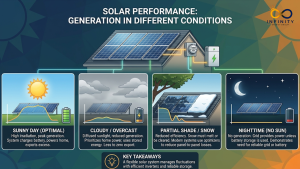
Performance in Different Conditions
-
High Temperatures
Monocrystalline solar panels perform better in high temperatures. They have a lower temperature coefficient, meaning their efficiency drops less as the temperature rises. Polycrystalline solar panels tend to lose more efficiency in hot climates.
-
Low Light Conditions
In cloudy or low-light conditions, monocrystalline solar panels outperform polycrystalline ones. Their higher efficiency allows them to generate more electricity even when sunlight is limited.
-
Space Availability
If roof space is limited, monocrystalline solar panels are the better choice because they produce more power per square meter. For larger installations where space is not an issue, polycrystalline solar panels can be a cost-effective alternative.
Environmental Impact
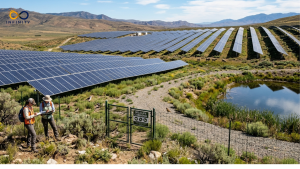
Both monocrystalline and polycrystalline solar panels are environmentally friendly compared to fossil fuels. However, their manufacturing processes differ slightly in environmental impact.
- Monocrystalline solar panels require more energy to produce because of the single-crystal silicon process.
- Polycrystalline solar panels use less energy during production, making them slightly more eco-friendly in manufacturing.
Despite this, both types contribute significantly to reducing carbon emissions once installed.
Aesthetic Differences
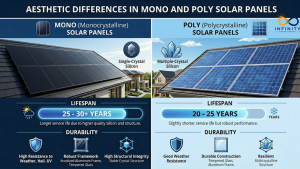
Aesthetics can also influence the decision between monocrystalline vs polycrystalline solar panels.
- Monocrystalline panels have a sleek black appearance that blends well with most roof designs.
- Polycrystalline panels have a blue, speckled look that is more noticeable.
For homeowners who value appearance, monocrystalline solar panels often provide a more modern and uniform look.
Space Efficiency
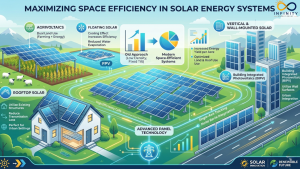
Because monocrystalline solar panels are more efficient, fewer panels are needed to generate the same amount of electricity Polycrystalline solar panels, while cheaper, require more surface area to achieve the same energy output.
Temperature Coefficient
The temperature coefficient measures how much a solar panel’s efficiency decreases as temperature increases. Monocrystalline solar panels typically have a lower temperature coefficient (around -0.3% to -0.4% per °C), meaning they perform better in hot weather. Polycrystalline solar panels have a higher coefficient (around -0.5% per °C), making them slightly less efficient in high temperatures.
Return on Investment (ROI)

While monocrystalline solar panels cost more initially, their higher efficiency and longer lifespan often result in a better return on investment. Over time, they generate more electricity, reducing energy bills and increasing savings. Polycrystalline solar panels may have a lower upfront cost, but their lower efficiency can lead to smaller long-term savings.
Maintenance and Reliability

Both monocrystalline and polycrystalline solar panels require minimal maintenance. Regular cleaning and occasional inspections are usually enough to keep them performing efficiently. However, monocrystalline solar panels tend to maintain their performance better over time due to their higher build quality.
Which Solar Panel Is Better?
The answer depends on individual needs, budget, and installation conditions.
Choose Monocrystalline Solar Panels if:
- Space is limited
- Maximum efficiency is desired
- Long-term performance and durability are priorities
- A sleek, modern appearance is preferred
Choose Polycrystalline Solar Panels if:
- Budget is limited
- There is plenty of roof space
- Slightly lower efficiency is acceptable
- A cost-effective solution is needed
Future Trends in Solar Technology
The solar industry continues to evolve, with new technologies improving both monocrystalline and polycrystalline solar panels. Innovations like PERC (Passivated Emitter and Rear Cell) technology and bifacial panels are increasing efficiency and energy yield. However, monocrystalline solar panels remain the leading choice for high-performance solar systems.
Final Verdict
When comparing monocrystalline vs polycrystalline solar panels, both have their advantages. Monocrystalline solar panels offer higher efficiency, better performance in all weather conditions, and a longer lifespan, making them ideal for those seeking maximum energy output and long-term value. Polycrystalline solar panels, on the other hand, provide a more affordable option for those with larger installation areas and tighter budgets.
Ultimately, the best choice depends on energy goals, available space, and budget. For most homeowners and businesses aiming for long-term efficiency and reliability, monocrystalline solar panels are the superior option. No matter whether you choose monocrystalline or polycrystalline panels, adding a battery can dramatically increase how much of your own solar energy you use at home, so it is worth understanding how solar batteries work and why Sydney homes are starting to adopt them so quickly.
Summary Table
| Feature | Monocrystalline Solar Panels | Polycrystalline Solar Panels |
| Material | Single crystal silicon | Multiple silicon crystals |
| Color | Black | Blue |
| Efficiency | 18–23% | 15–18% |
| Lifespan | 25–30 years | 20–25 years |
| Cost | Higher | Lower |
| Temperature Performance | Better | Moderate |
| Space Efficiency | High | Low |
| Aesthetics | Sleek and uniform | Speckled and blue |
| Best For | Limited space, high efficiency | Budget-friendly installations |
FAQ for Monocrystalline vs Polycrystalline Solar Panels: Which Is Better?

-
What is the difference between monocrystalline and polycrystalline solar panels?
Monocrystalline solar panels are made from a single silicon crystal, making them more efficient and sleek in appearance. Polycrystalline panels are made from multiple silicon fragments melted together, making them more affordable but slightly less efficient.
-
Which solar panel is more efficient?
Monocrystalline solar panels are generally more efficient, often achieving 18%–24% efficiency, while polycrystalline panels usually range between 15%–18%.
-
Are monocrystalline solar panels better for Sydney homes?
Yes, monocrystalline panels are often preferred in Sydney, especially for homes with limited roof space, because they generate more electricity in a smaller area.
-
Which solar panel type is cheaper?
Polycrystalline solar panels are usually more budget-friendly because their manufacturing process is simpler and less expensive.
-
Do monocrystalline panels last longer?
Both monocrystalline and polycrystalline panels have a lifespan of around 25–30 years, but monocrystalline panels often come with slightly better long-term performance.
Conclusion
In the end, the biggest financial win usually comes from switching away from relying on traditional grid electricity, and this comparison of solar panels versus traditional electricity shows how much difference going solar can make over the life of a system, regardless of whether you pick mono or poly panels. Both monocrystalline and polycrystalline solar panels play a vital role in the transition to clean energy. While monocrystalline solar panels stand out for their superior efficiency, durability, and sleek design, polycrystalline solar panels remain a practical choice for those seeking affordability. Evaluating energy needs, available space, and budget will help determine which type of solar panel is the best investment for a sustainable future.