
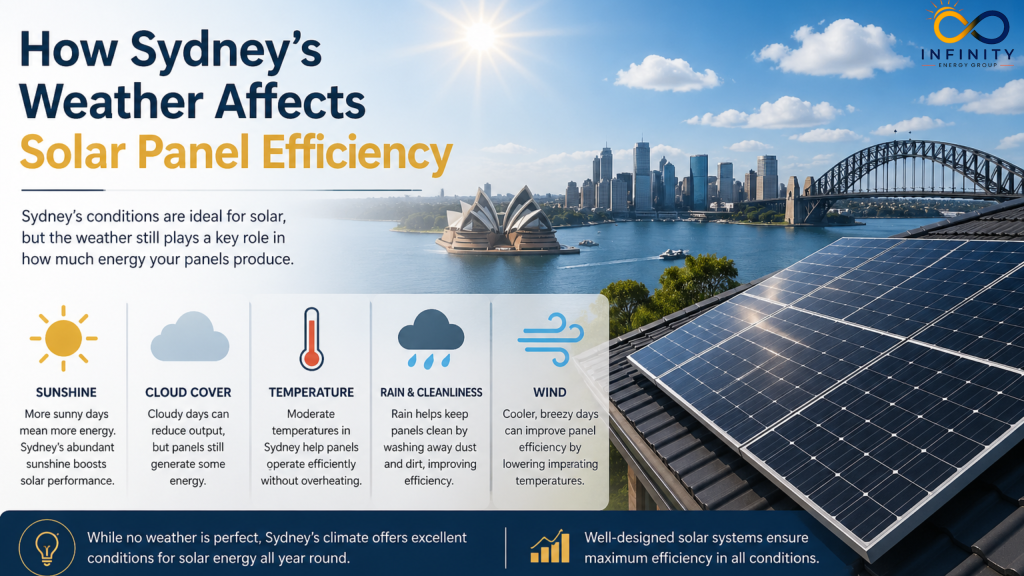
Sydney, known for its sunny climate and coastal beauty, is one of Australia’s best locations for solar energy, thousands of households and businesses switching to solar power, understanding how Sydney’s weather affects solar panel efficiency is essential. While solar panels thrive in sunlight, their performance can vary depending on temperature, humidity, cloud cover, and other environmental factors. This guide explores how Sydney’s unique weather patterns influence solar energy production and how to maximize efficiency year round.
Understanding Solar Panel Efficiency
Solar panel efficiency refers to how effectively a panel converts sunlight into usable electricity. Most modern panels have an efficiency rate between 15% and 22%. This means that out of all the sunlight hitting the panel, only a portion is converted into electrical energy. The rest is lost as heat or reflected light.
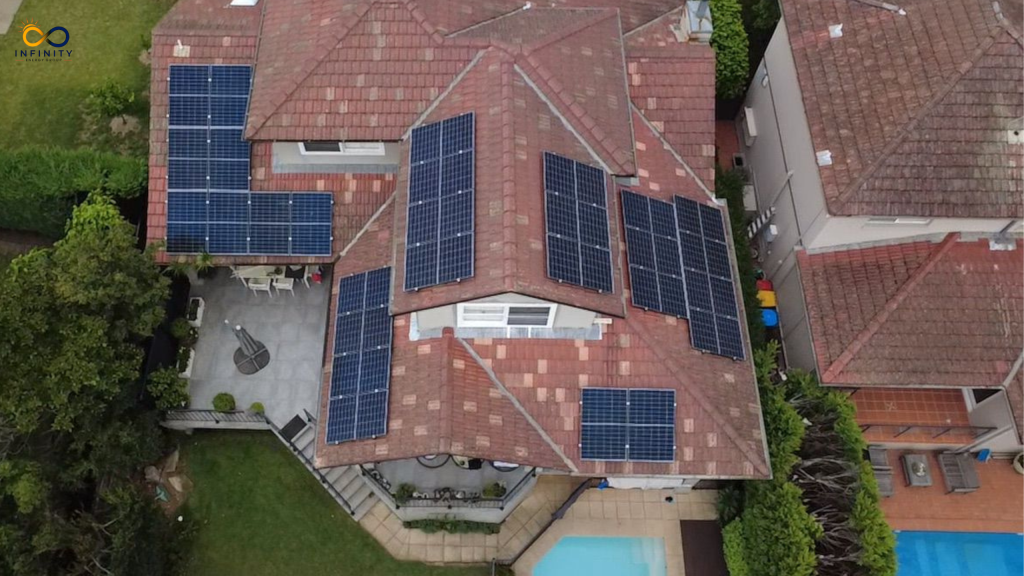
Efficiency depends on several factors:
- Solar irradiance: The amount of sunlight reaching the panel.
- Temperature: High heat can reduce performance.
- Angle and orientation: Panels facing the right direction capture more sunlight.
- Shading and dirt: Obstructions can block sunlight and lower output.
- Weather conditions: Cloud cover, humidity, and rainfall all play a role.
Sydney’s weather provides a mix of sunny days and mild temperatures, making it ideal for solar energy. However, seasonal variations can still influence how much power panels produce. Let’s look at how your solar systems perform under different conditions.
Sydney’s Climate Overview
Sydney experiences a temperate climate with warm summers, mild winters, and moderate rainfall throughout the year. On average, the city enjoys around 2,600 hours of sunshine annually, which is excellent for solar generation.
Key Climate Statistics:
- Average summer temperature: 26°C (79°F)
- Average winter temperature: 17°C (63°F)
- Average annual rainfall: 1,200 mm
- Average daily sunlight hours: 7–8 hours
These conditions create a favorable environment for solar panels, but each season brings unique challenges and benefits.
The Impact of Temperature on Solar Panels
While solar panels need sunlight to generate electricity, excessive heat can actually reduce their efficiency. Most panels are tested at a standard temperature of 25°C. For every degree above this, efficiency typically drops by 0.3% to 0.5%.
Summer in Sydney
During summer, Sydney often experiences temperatures above 30°C. Although the days are long and sunny, the heat can cause panels to operate less efficiently. The silicon cells inside the panels become warmer, increasing electrical resistance and reducing voltage output.
However, the overall energy production remains high because of the extended daylight hours. Proper ventilation and installation techniques can help offset heat-related losses.
Tips to improve summer efficiency:
- Install panels with a small gap between the roof and the panel surface for airflow.
- Choose panels with a lower temperature coefficient.
- Keep panels clean to prevent dust buildup that can trap heat.
Winter in Sydney
Winter temperatures in Sydney are mild, usually between 8°C and 17°C. Cooler weather helps panels operate more efficiently since lower temperatures reduce resistance in the solar cells. Although daylight hours are shorter, the panels perform better per hour of sunlight received.
The Role of Sunlight and Cloud Cover
Sydney’s solar potential is largely driven by its high number of sunny days. However, cloud cover can still affect daily energy output.
Clear Days
On clear days, solar panels receive direct sunlight, producing maximum power. Sydney’s long stretches of sunny weather, especially in spring and summer, make it one of the best cities in Australia for solar energy.
Cloudy Days
Clouds diffuse sunlight, reducing the intensity that reaches the panels. On heavily overcast days, solar output can drop by 50% to 80%. However, modern solar panels are designed to capture diffuse light, meaning they still generate electricity even when the sky is cloudy.
Seasonal Cloud Patterns
- Summer: Mostly sunny with occasional thunderstorms.
- Autumn: Moderate cloud cover and stable sunlight.
- Winter: More overcast days but cooler temperatures.
- Spring: Clear skies and strong sunlight, ideal for solar generation.
The Effect of Rain and Humidity
Rain and humidity are common in Sydney, especially during late summer and early autumn. While rain may seem like a disadvantage, it can actually benefit solar panels in several ways.
Benefits of Rain
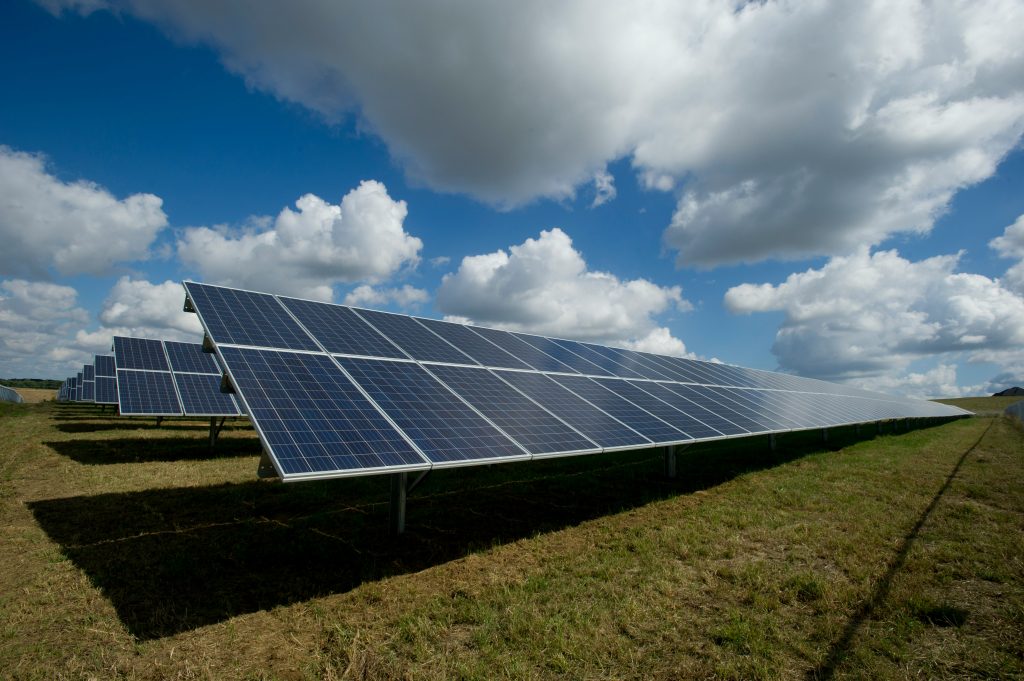
- Natural cleaning: Rain washes away dust, pollen, and bird droppings that block sunlight.
- Cooling effect: Rain lowers panel temperature, improving efficiency.
- Improved performance after rain: Clean panels absorb more sunlight once the skies clear.
Challenges of Humidity
High humidity can cause condensation on the panel surface, slightly reducing light absorption. Over time, moisture can also affect the electrical components if the panels are not properly sealed. Choosing high-quality panels with strong weatherproofing ensures long-term durability in Sydney’s humid conditions.
The Influence of Wind
Sydney’s coastal location means it often experiences breezy conditions. Wind can have both positive and negative effects on solar panels.
Positive Effects
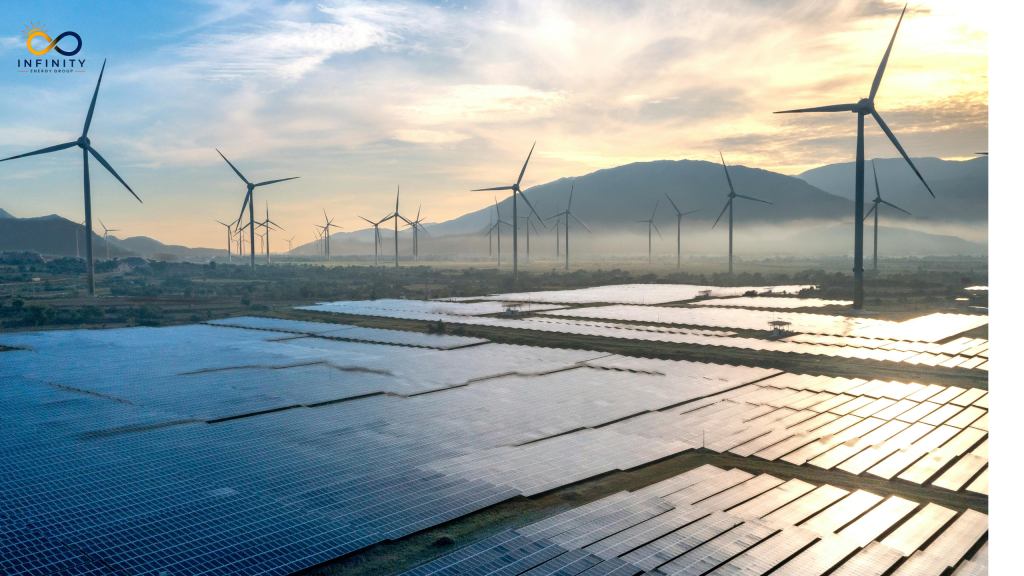
- Cooling: Wind helps dissipate heat from the panels, improving efficiency.
- Air circulation: Reduces the buildup of dust and debris.
Negative Effects
- Structural stress: Strong winds can strain mounting systems if not properly installed.
- Salt exposure: Coastal winds may carry salt particles that can corrode metal parts over time.
Proper installation and regular maintenance help prevent wind-related damage and ensure consistent performance.
Seasonal Solar Performance in Sydney
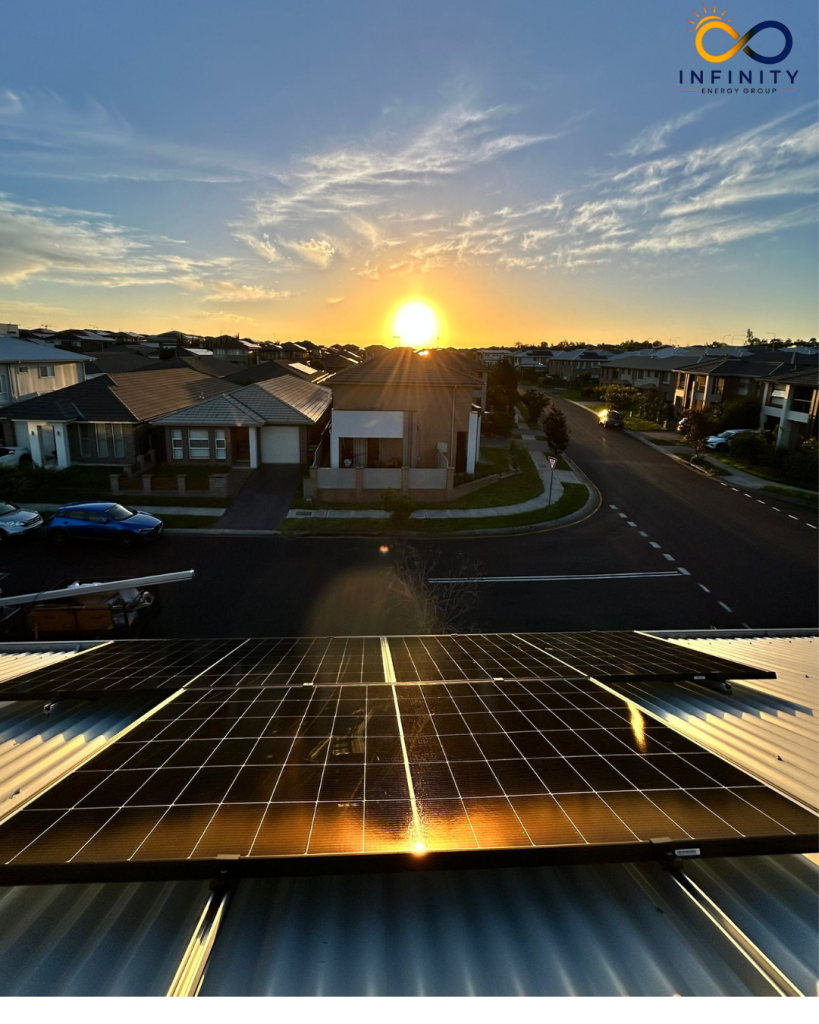
Summer (December–February)
- Pros: Long daylight hours, high solar irradiance.
- Cons: High temperatures reduce efficiency slightly.
- Average daily output: 5.5–6.5 kWh per kW installed.
Autumn (March–May)
- Pros: Mild temperatures and stable sunlight.
- Cons: Occasional rain and cloud cover.
- Average daily output: 4.5–5.5 kWh per kW installed.
Winter (June–August)
- Pros: Cooler temperatures improve efficiency.
- Cons: Shorter days and more clouds.
- Average daily output: 3.5–4.5 kWh per kW installed.
Spring (September–November)
- Pros: Clear skies, moderate temperatures, and long days.
- Cons: Minimal weather-related issues.
- Average daily output: 5–6 kWh per kW installed.
Since weather impacts solar performance, choosing the right installation time is crucial read Best Time to Install Solar Panels in Sydney.
Maximizing Solar Efficiency in Sydney’s Weather
To get the most from solar panels in Sydney, several strategies can help optimize performance throughout the year.
-
Optimal Panel Orientation
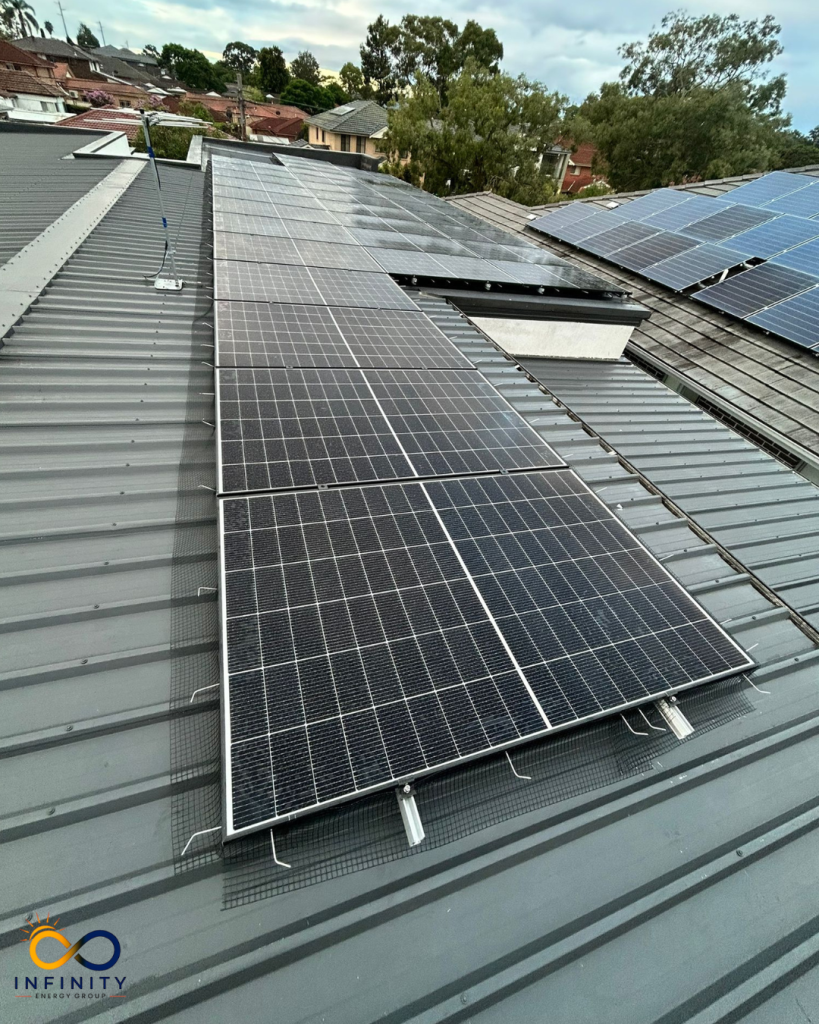
In Sydney, panels should face north to capture the most sunlight. The ideal tilt angle is around 30–35 degrees, which balances summer and winter sun exposure.
-
Regular Cleaning and Maintenance
Dust, leaves, and bird droppings can block sunlight. Cleaning panels every few months, especially after dry periods, ensures maximum solar panel efficiency. Rain helps, but manual cleaning may still be needed.
-
Use of High-Efficiency Panels
Premium panels with higher efficiency ratings perform better under cloudy or hot conditions. They also degrade more slowly over time, providing better long-term returns.
-
Monitoring Systems
Smart monitoring systems track energy production and detect performance issues early. This helps identify problems like shading, dirt buildup, or inverter faults.
-
Professional Installation
Proper installation ensures panels are securely mounted, well-ventilated, and angled correctly. Certified installers also ensure compliance with local safety and electrical standards.
The Long-Term Outlook for Solar in Sydney
Sydney’s combination of abundant sunshine, supportive government incentives, and growing environmental awareness makes solar energy a smart investment. Despite occasional weather challenges, the city’s climate remains one of the most favorable for solar power in Australia.
With advancements in solar technology, panels are becoming more efficient and resilient to weather variations. Features like anti-reflective coatings, improved temperature tolerance, and better moisture resistance ensure consistent performance across all seasons.
FAQ(Frequently Asked Question)

-
How does Sydney’s climate impact solar panel performance?
Sydney’s climate is generally ideal for solar panels, with plenty of sunshine throughout the year. However, seasonal changes like cloudy days, rain, and temperature variations can slightly affect how much energy your system produces.
-
Do solar panels still work on cloudy or rainy days?
Yes, solar panels still generate electricity on cloudy or rainy days, but at a reduced efficiency. They rely on sunlight, not heat, so even diffused light can produce power.
-
Does extreme heat reduce solar panel efficiency?
Surprisingly, yes. Very high temperatures can slightly reduce the solar panel efficiency. While Sydney’s summers are warm, most modern panels are designed to handle heat with minimal performance loss.
-
How do winter months affect solar energy production?
In winter, shorter daylight hours and lower sun angles can reduce energy production. However, cooler temperatures can actually improve solar panel efficiency, balancing some of the loss.
-
Is Sydney’s sunshine enough to make solar panels worthwhile?
Absolutely. Sydney receives strong sunlight for most of the year, making it one of the best locations in Australia for solar energy generation.
Conclusion
Sydney’s weather plays a significant role in solar panel efficiency, but overall, the city’s climate is highly suitable for solar energy production. While high temperatures can slightly reduce performance in summer, the abundance of sunlight more than compensates. Cooler winters enhance efficiency, and rain naturally cleans panels, maintaining their effectiveness.
By understanding how temperature, sunlight, humidity, and wind affect solar panels, homeowners and businesses can make informed decisions to maximize energy output and make solar panel efficinet. With proper installation, maintenance, and system design, solar panels in Sydney can deliver reliable, clean, and cost-effective power for decades.